

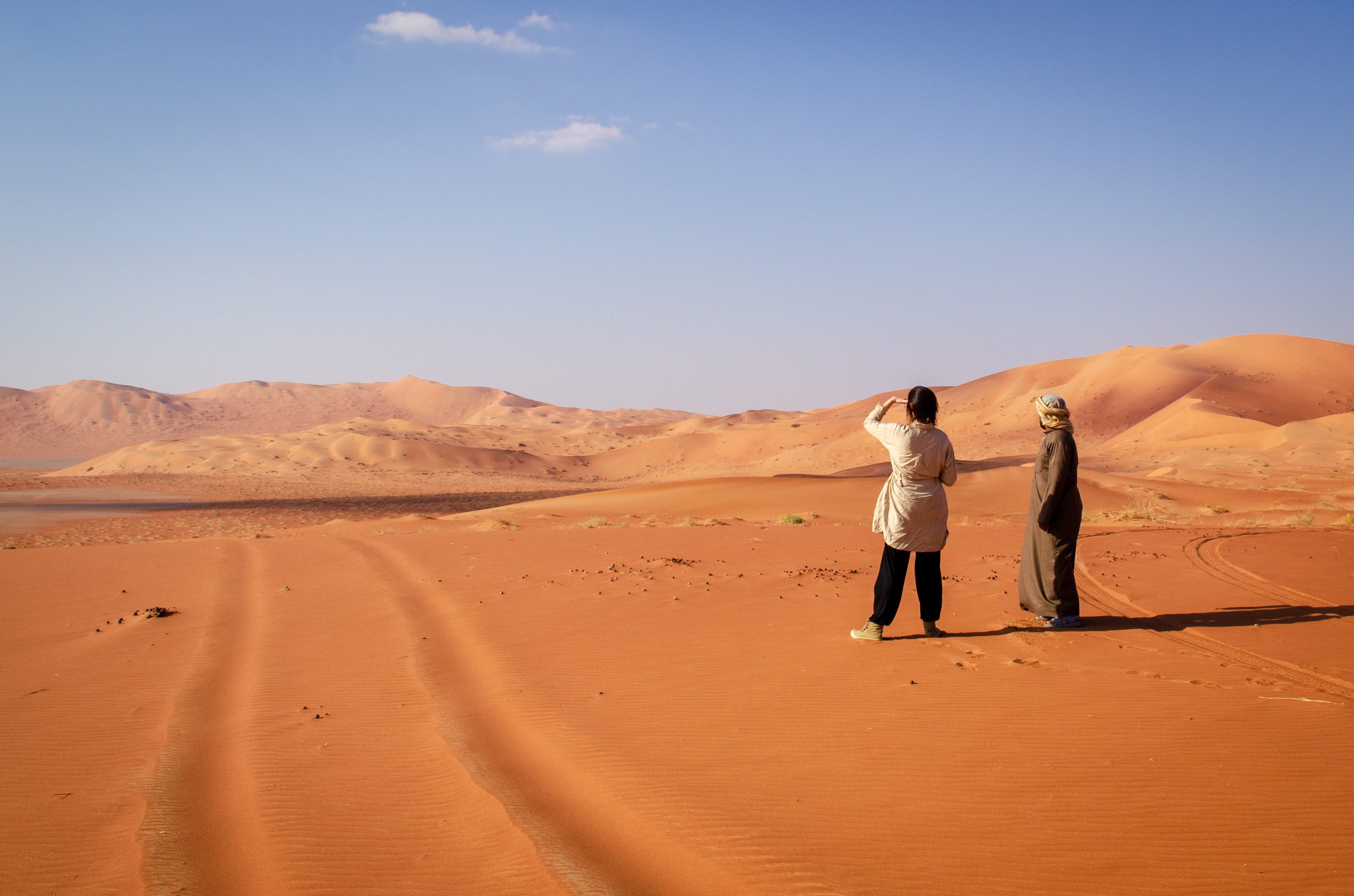
Temporary Exhibition
Beyond the Desert: Stories of people and discoveries
Step into a land where ancient worlds meet cutting-edge science. From vast deserts to thriving civilizations, discover how archaeology is uncovering the past — and helping us understand the climate challenges of our future.
Explore. Discover. Rethink the past.
Explore the exhibition
Four threads through the sand.
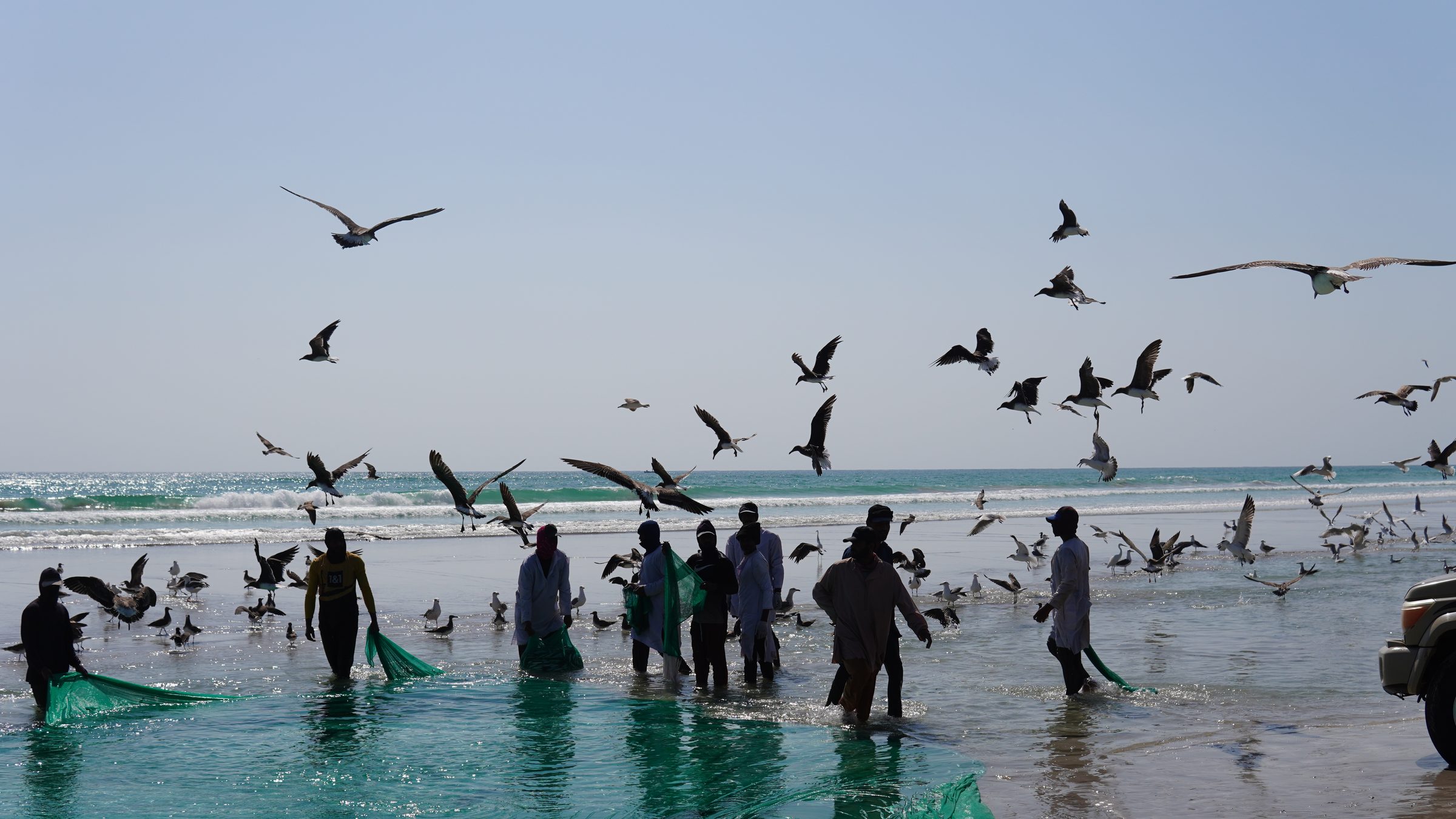
Timeline
Stories of People and Discoveries
The Arabian Peninsula has always been a space of adaptation and relation between Africa, Asia, and the Mediterranean — shaped by water, metals, oases, and trade routes.
750k BP – 3200 BCE
Prehistory
As early as the Paleolithic, over 700,000 years ago, the Arabian Peninsula was crossed and inhabited by human groups moving between Africa and Eurasia. Their presence was not continuous: climatic oscillations turned territories that are arid today into landscapes of lakes, watercourses, grasslands, and wildlife, while the return of aridity reduced settlement and prompted communities to reorganize routes and strategies.
In the Neolithic, between ten thousand and six thousand years ago, hunting, fishing, and gathering were integrated with the herding of sheep, goats, and cattle. Rather than the sedentary agricultural village typical of the Near East, the communities of Arabia adopted flexible strategies, combining herding, hunting, fishing, gathering, and seasonal mobility according to the opportunities offered by coasts, terraces, foothills, and mountains.
3200 – 1300 BCE
Bronze Age
In the third millennium BCE, copper made the Arabian Peninsula a protagonist of the great trade networks of the Near East. Mesopotamian sources name the land of Magan — southeastern Arabia and the Oman Peninsula — and the kingdom of Dilmun in the Gulf.
Copper was an engine of exchange, connecting Mesopotamia, Iran, the Indus Valley, the Arabian Gulf, and the Sea of Oman. Plants and agricultural practices circulated too, contributing to the formation of the oasis. Water, date palms, cultivation, and herding built more stable productive landscapes without erasing seasonal mobility.
1300 BCE – CE 632
Iron Age & Late Antiquity
In the first millennium BCE, water and mobility became decisive forces. In southeastern Arabia the falaj spread — tunnels and channels tapping underground water toward fields and oases — favoring agriculture, denser settlement, and connections between mountains, plains, and coasts.
The domestication of the dromedary transformed desert travel. The South Arabian Kingdoms, including Saba, prospered on irrigated agriculture, caravan routes, and the trade of frankincense and myrrh, while the north and northwest linked the southern routes to the Levant and Rome.
632 CE – present
Islamic Period
In the seventh century CE, the birth of Islam deeply transformed the Peninsula. Mecca and Medina became the centers of a new religious and political community, uniting diverse groups without erasing local traditions.
Even when power shifted outside Arabia, the region kept an essential role: the holy cities remained poles of pilgrimage, and the coasts continued to take part in the trade of the Red Sea, the Arabian Gulf, and the Indian Ocean.